PVC pipe manufacturing is a game of consistency. Whether you are producing plumbing pipes, electrical conduits, or irrigation piping, your twin-screw extruder must deliver a uniform melt, every single minute, at high speed.
However, PVC is notoriously difficult to process due to its high sensitivity to temperature and its heavy reliance on fillers like Calcium Carbonate (CaCO3). At Twin Technologys, we have seen that many production bottlenecks in PVC lines start and end with the condition of the extruder’s internal components.
1. Managing High Filler Loads
PVC compounds often contain significant amounts of CaCO3 or other mineral fillers. While these reduce costs, they are highly abrasive.
- The Impact: These fillers act like sandpaper on your screw elements and barrel walls. If your components aren’t engineered for high abrasion resistance, your flight tips will wear down quickly, leading to a loss of pressure in the metering zone.
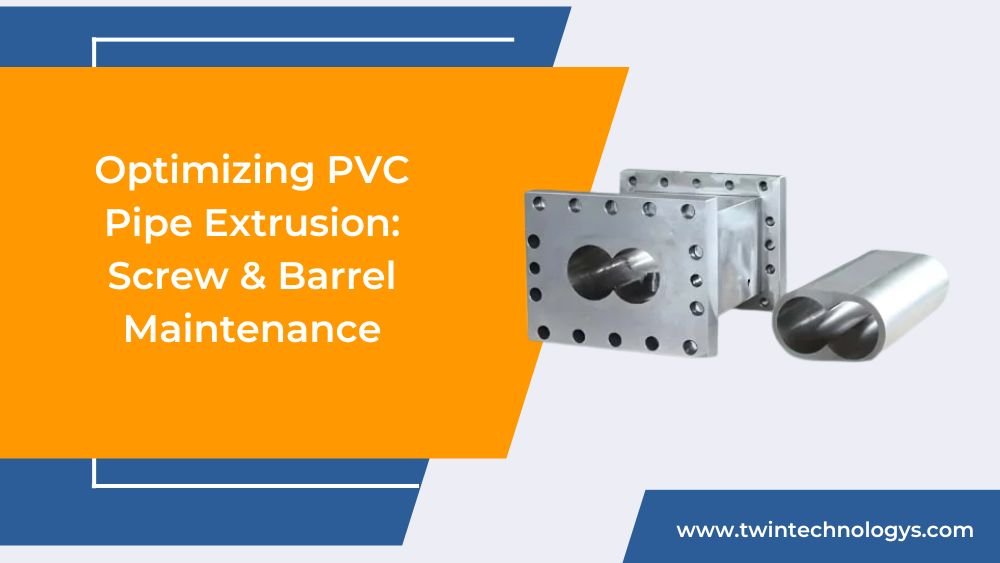
- The Solution: Use screw elements manufactured from high-performance tool steels. Regular, scheduled inspection of the flight-to-barrel gap is mandatory to maintain the pressure required for a high-quality pipe wall.
2. The Temperature Control Challenge
PVC is prone to degradation if it stays in the barrel for too long or if the temperature hits a “hot spot.”
- Screw Design: A PVC-specific screw design focuses on a gradual compression ratio. Avoid overly aggressive mixing elements in the early stages; you want a steady, predictable transition from solid to melt.
- Venting: Ensure your screw configuration includes properly placed vacuum ports. Efficient degassing is essential to remove trapped air and prevent voids in your pipe wall, which are the leading cause of structural failures during pressure testing.
3. Maintenance for High Output
To keep a PVC pipe line running 24/7, you need a “predictive” rather than “reactive” maintenance approach:
- Check Intermeshing: Over time, the wear on the screw elements changes the intermeshing profile. This can lead to increased torque requirements and higher motor load.
- Surface Finish: Smooth, polished screw elements are vital for PVC to prevent material “hang-up.” Any buildup of burnt material will eventually break off and cause “specks” in your pipe, leading to high scrap rates.
Conclusion
Optimizing a PVC pipe extrusion line isn’t just about the machine settings; it’s about the hardware inside. By maintaining the precise geometry of your screws and using wear-resistant components, you can significantly reduce your scrap rate and keep your production lines moving profitably.