In the masterbatch industry, color accuracy is everything. Whether you are producing specialized concentrates for automotive parts or high-clarity pigments for packaging, “close enough” is never good enough. The challenge is ensuring that your pigments are perfectly dispersed and encapsulated within the carrier resin without degrading the material.
At Twin Technologys, we work with compounding facilities to refine their process, moving beyond simple mixing to true high-performance dispersion.
1. The Critical Role of Shear
Masterbatch production requires a delicate balance of shear stress.
- Low Shear: Leads to “fish eyes” or undispersed pigment agglomerates in the final product.
- High Shear: Can cause thermal degradation of the carrier resin, leading to yellowing or poor physical properties.
- The Sweet Spot: Your screw design must utilize distributive and dispersive mixing elements in sequence. Distributive mixing spreads the pigment particles throughout the melt, while dispersive mixing breaks down the pigment agglomerates to the required particle size.
2. Optimizing the Feeding Zone
Color consistency starts at the feed throat. If your pigment and resin aren’t entering the extruder in the correct ratios or with proper timing, your color profile will drift.
Recommendation: Use side-feeders to introduce high-concentration pigments downstream after the carrier resin has already melted. This prevents the pigment from being subjected to unnecessary heat cycles, protecting its chemical integrity.
3. Precision Screw Elements for Consistency
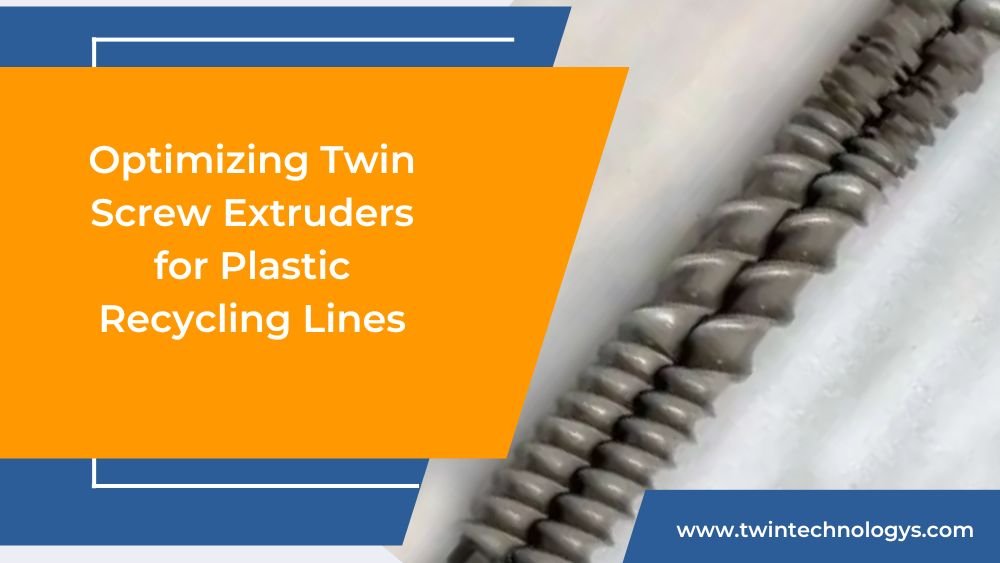
Your screw configuration acts as the final arbiter of quality. Using off-the-shelf, low-precision components often leads to “dead spots” in the screw profile where pigment can accumulate and later “spit out” into your production run, causing color contamination.
Pro-Tip: Ensure your kneading blocks and mixing elements are manufactured to the tightest tolerances. Consistency in the intermeshing profile ensures that every pellet that leaves your extruder has the exact same color concentration.
4. Improving Cleaning Efficiency
In masterbatch production, frequent changeovers are a reality.
- The Efficiency Factor: Using components with a high-quality surface finish reduces material “hang-up,” making it significantly faster to purge your machine when switching from one color to another. This maximizes your “uptime” and reduces expensive scrap material during changeovers.
Conclusion
Perfect color dispersion is a combination of accurate feeding, smart shear management, and precision hardware. By upgrading your screw configuration, you can achieve more consistent results, reduce your waste during changeovers, and deliver the high-quality concentrate your clients demand.