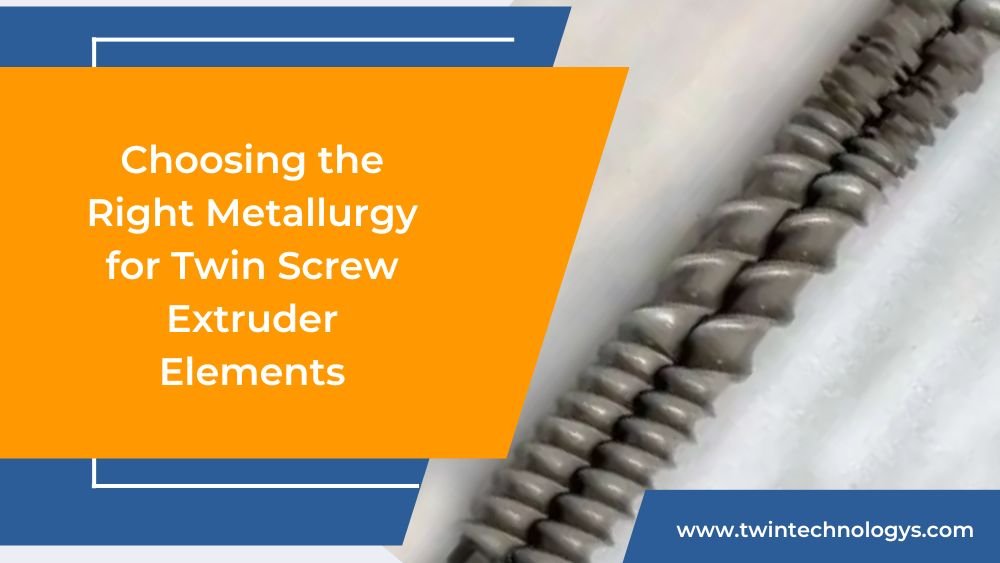
The material your screw elements are made from is the single biggest factor in determining their lifespan. At Twin Technologys, we often consult with plants that are frustrated by frequent replacements—only to discover they are using a standard steel grade for an application that demands advanced metallurgical solutions.
To optimize your replacement cycle, you must match the metallurgy to your specific process environment.
1. The Three "Enemies" of Screw Elements
Before selecting a material, you need to identify the primary cause of your current element failure:
- Abrasion: Caused by mineral fillers (like talc, CaCO3) or glass fibers. This requires materials with high surface hardness.
- Corrosion: Caused by flame retardants, acidic additives, or moisture. This requires materials with high chromium or nickel content.
- High Torque/Stress: Caused by high-viscosity compounding. This requires materials with high “toughness” to prevent chipping or cracking.
2. Common Metallurgy Options
When selecting your replacement components, you will generally choose between these tiers:
| Material Type | Best For | Benefit |
| Nitrided Steel | Standard polymers (PE, PP) | Cost-effective, good general wear resistance. |
| Hardened Tool Steel | Abrasive fillers | High hardness; resists scoring and wear. |
| Powder Metallurgy (PM) | Highly abrasive/corrosive | Superior life; maintains hardness at high temps. |
| Specialized Alloys | Extreme chemical resistance | Prevents degradation in acidic environments. |
3. Why "Over-Engineering" Actually Saves Money
It is tempting to choose the cheapest steel grade to keep short-term costs low. However, in industrial extrusion, the cost of the part is often less than 20% of the total cost of the downtime required to change it.
- If a Powder Metallurgy element lasts 3x longer than standard nitrided steel, you are effectively cutting your labor and downtime costs by two-thirds, even if the element itself has a higher upfront price.
4. How We Select Your Material
At Twin Technologys, we don’t just supply parts; we analyze your process. When we design your custom screw configuration, we look at your:
- Material formulation (Filler % and chemical makeup).
- Typical processing temperature.
- Historical wear patterns.