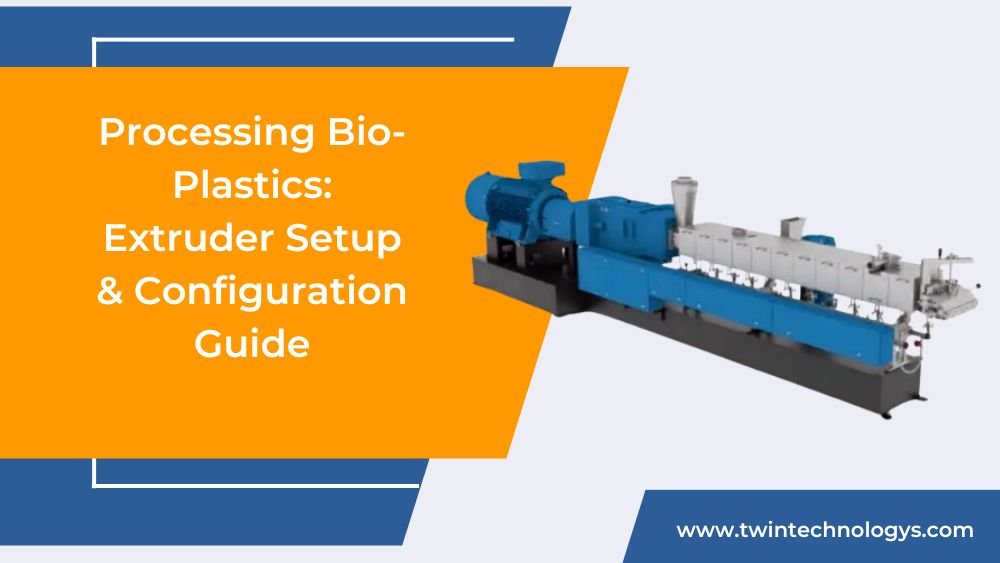
As the global manufacturing industry shifts toward sustainable materials, many compounding facilities are moving into the processing of bio-plastics like PLA (Polylactic Acid) and PHB (Polyhydroxyalkanoates). While these materials are environmentally friendly, they present unique engineering challenges compared to traditional resins like PE or PP.
At Twin Technologys, we have helped numerous clients reconfigure their twin-screw lines to handle these sensitive, bio-based materials effectively. Here is what you need to know.
1. The Challenge of Thermal Sensitivity
Most bio-plastics, particularly PLA, are highly sensitive to thermal degradation. If the material stays in the barrel too long or experiences localized overheating (high shear), it loses molecular weight and physical strength.
The Solution: Optimize your screw configuration to minimize residence time. You need a setup that promotes efficient melting but avoids “dead zones” where material can sit and degrade.
2. Moisture Control is Critical
Bio-plastics are often hygroscopic, meaning they absorb moisture from the air. Even a small amount of moisture can trigger “hydrolytic degradation” during extrusion, resulting in a brittle final product.
The Solution: Your extruder must be equipped with a robust vacuum degassing system. Ensure your screw design includes specialized transport elements before and after the vent port to create an effective pressure seal, allowing the vacuum to pull out moisture and volatiles effectively.
3. Adjusting Screw Geometry
Bio-plastics often require a more “gentle” touch. You may need to replace aggressive mixing elements with designs that offer:
- Distributive Mixing: To achieve a uniform color or additive dispersion without the excessive shear heat caused by aggressive kneading blocks.
- Correct Flight Depth: Depending on the bulk density of your bio-plastic pellets or powder, you may need elements with different flight depths to ensure consistent throughput without surging.
4. Component Compatibility
Because bio-plastics are often processed in clean or food-grade environments, the surface finish of your screw elements is important.
Surface Treatment: We recommend using precision-ground screw components that offer low-friction surfaces. This reduces material buildup, simplifies the cleaning process, and ensures that no degraded material is left behind between batches.
Conclusion
Transitioning to bio-plastics doesn’t require a brand-new production line, but it does require a “smarter” setup. By focusing on thermal management, moisture removal, and optimized screw geometry, you can produce high-quality, sustainable compounds that meet the growing market demand.
Are you planning to add bio-plastics to your production line?
Contact Twin Technologys to get a custom engineering review of your current screw configuration and component needs.