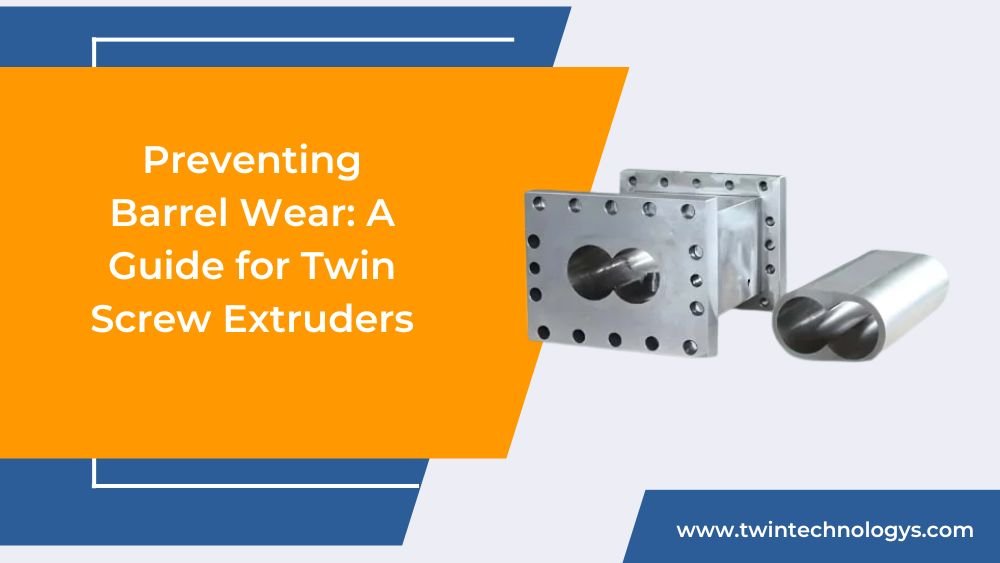
The barrel is the “casing” of your extrusion process. It provides the pressure vessel and the heat-transfer surface necessary for your polymer to melt and mix. However, because it is in constant contact with moving screw elements and abrasive materials, it is one of the most susceptible components to long-term wear.
At Twin Technologys, we often see that proactive barrel care is the difference between a machine that lasts 10 years and one that requires a complete overhaul in three.
1. The Primary Causes of Barrel Wear
Barrel wear usually occurs in two forms: Abrasive Wear (from fillers like glass fiber or talc) and Corrosive Wear (from chemical additives or acidic polymer degradation).
- The “Oval” Effect: Over time, the internal diameter of the barrel wears unevenly, often becoming oval-shaped. This increases the gap between the screw and the barrel wall.
- Loss of Venting Efficiency: As the gap increases, the barrel loses its ability to hold pressure for degassing, which leads to bubbles or imperfections in your finished product.
2. How to Monitor Your Barrel Health
Don’t wait for your production quality to drop before checking your barrels.
- Routine Metrology: During screw pulls, use internal bore gauges to measure the barrel diameter at several points. Compare these measurements against the original manufacturer specifications.
- Monitor Barrel Temperature Control: If you notice that your heaters are working significantly harder to maintain the set temperature in a specific zone, it may indicate that the barrel wall thickness has changed, affecting heat transfer efficiency.
- Check for Surface Scoring: During visual inspections, use a borescope to look for deep scratches or “scoring” on the inner surface of the barrel liner.
3. Maintenance Best Practices
- Proper Screw Alignment: Misaligned screws act like a grinding tool against your barrel. Ensure your screws are perfectly centered to minimize unnecessary friction.
- Use High-Quality Lubricants: If your specific process allows for it, ensure your material formulation and processing parameters are optimized to minimize friction.
- Invest in Bimetallic Liners: If you are processing highly abrasive materials, standard steel barrels will not suffice. Upgrading to Bimetallic Barrel Liners with specialized alloys can increase your barrel life by 3x–5x.
4. When to Replace?
A worn barrel eventually becomes a cost-drain. It leads to:
- Higher scrap rates (lower quality pellets).
- Increased energy consumption (as the machine works harder to maintain processing conditions).
- Risk of catastrophic failure during high-pressure runs.
If your barrel exceeds the tolerance gap recommended for your specific material, it is time to invest in a precision-engineered replacement.
Conclusion
A healthy barrel is the foundation of a stable extrusion process. By regularly monitoring wear and choosing the right metallurgy for your specific application, you can protect your machinery investment and ensure consistent throughput.