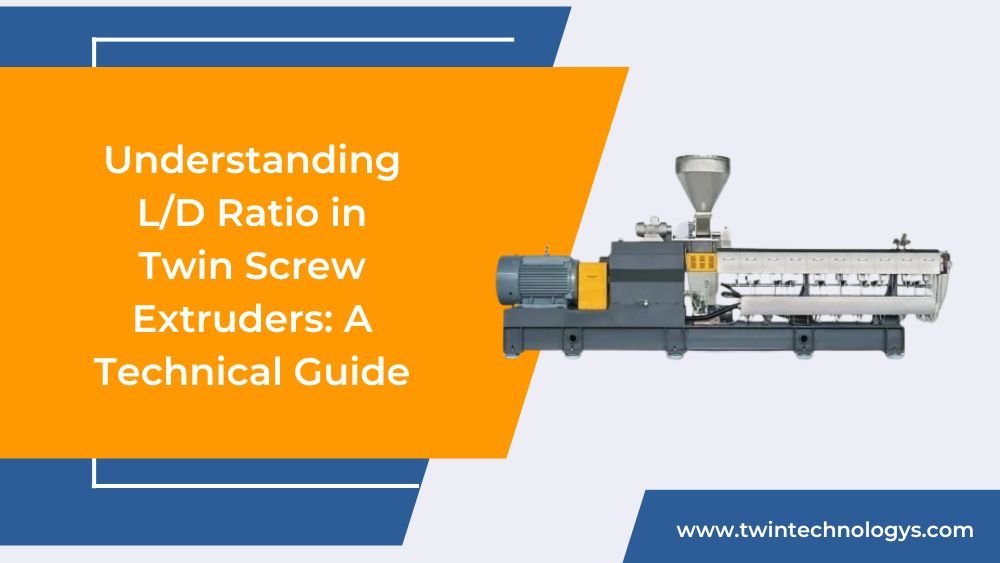
If you are involved in the design or operation of a twin-screw extrusion line, you have likely encountered the term L/D Ratio (Length-to-Diameter ratio). While it sounds like a simple technical specification, it is arguably the most critical factor in determining how your machine processes material.
What is the L/D Ratio?
Why the L/D Ratio Matters
The ratio is not just about the size of the machine; it is about the residence time and the number of process stages you can perform.
- Low L/D Ratios (e.g., 20:1 to 32:1): Generally suitable for simple compounding, masterbatch, or non-reactive processes where extensive mixing or degassing is not required.
- High L/D Ratios (e.g., 40:1 to 60:1): Essential for complex processes. A longer L/D ratio allows for:
- Multiple Feeding Points: Ideal for side-feeding additives or glass fibers.
- Enhanced Degassing: More space for multiple vacuum venting zones to remove volatiles.
- Step-by-Step Mixing: More room for specialized kneading blocks to ensure thorough dispersion.
Factors Influencing Your Choice
Choosing the right L/D ratio depends on your specific goals:
- Material Sensitivity: If your material is thermally sensitive, a shorter L/D ratio with high-speed mixing elements might be better to reduce residence time and prevent degradation.
- Additives & Fillers: If you are processing high-loading glass fibers or minerals, a higher L/D ratio is necessary to allow for “downstream feeding,” which prevents the additives from being crushed by the initial melting section of the screw.
- Throughput Requirements: Increasing the L/D ratio generally provides more surface area for heat transfer and mixing, which can lead to higher output if configured correctly.
The Importance of Precision Components
Whether you are running a 28:1 or a 52:1 configuration, the performance of your machine depends on the intermeshing accuracy of your screw elements. A higher L/D ratio means there are more elements on the shaft—if one is slightly out of tolerance, it can create a bottleneck for the entire line.
At Twin Technologys, we engineer our replacement screw elements to maintain tight, consistent tolerances across the entire length of your shaft, ensuring that your L/D ratio works for you, not against you.
Conclusion
The L/D ratio is the blueprint of your extrusion process. By understanding how this ratio impacts your specific material—and ensuring your screw components are manufactured to the highest precision—you can dramatically improve your compounding efficiency.