In the world of twin-screw extrusion, achieving a homogeneous melt for high-viscosity materials is one of the most significant engineering challenges. When processing polymers with high molecular weights or glass-filled compounds, the screw configuration isn’t just a part of the machine—it is the heart of the process.
The Role of Kneading Blocks
For high-viscosity materials, shear stress is your greatest tool. Kneading blocks are essential here. By adjusting the stagger angle, you can control the balance between distributive and dispersive mixing. For high-viscosity compounds, a 45° or 60° stagger angle is often preferred to increase the shear rate and ensure the additives are fully encapsulated in the polymer matrix.
Balancing Conveying vs. Mixing Elements
A common mistake in screw design is overcrowding the shaft with mixing elements. While more mixing elements sound like better quality, they increase backpressure significantly, which can lead to:
- Degradation due to localized overheating.
- Reduced throughput (output rate).
- Excessive wear on the barrel liners.
Three Rules for Success:
- Analyze Material Rheology: Before setting your configuration, map the viscosity curve of your polymer. High viscosity requires a slower, more deliberate buildup of shear.
- Monitor Melt Temperature: If your melt temperature fluctuates, your screw configuration may be creating “dead zones” where material resides too long.
- Choose Precision Components: Poorly manufactured kneading blocks lead to inconsistent gaps, which ruins dispersion. Always use precision-engineered Twin Screw Extruder Components designed for tight tolerances.
Conclusion
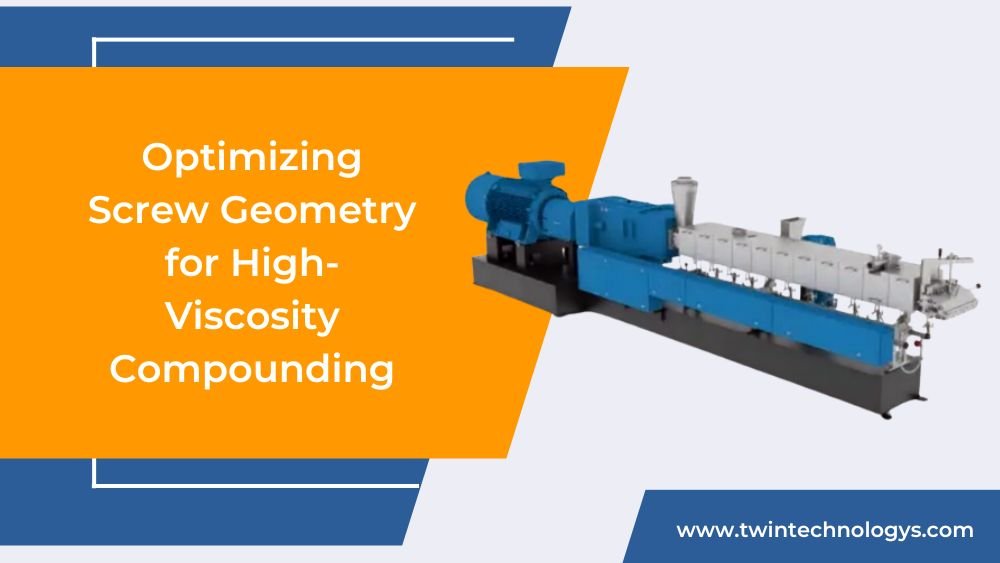
Do you need to optimizing Screw Geometry for High-Viscosity Compounding ?
Contact Twin Technologys to discuss how our custom engineering screw elements manufacturing services can help you optimize your screw geometry.